
IMPLAN Case Study
ACHIEVA & the Cohort: How One Nonprofit Learned its Economic Impact

Introduction:
In 2014, The Forbes Fund partnered with the United Way of Southwestern Pennsylvania and The Pittsburgh Foundation to sponsor an economic impact analysis of the nonprofits sector in Allegheny County, Pennsylvania.
The project was a success and the results served to demonstrate, with objective data to back it up, that the collection of participating small to medium-sized nonprofits supported nearly $5 billion in annual wages paid and over 100,000 jobs throughout the local economy. The study defined small to medium-sized nonprofits as groups with budgets of $100 million or less.
While the effort was a success overall, individual community nonprofits that had been included in the roughly 2,000 organizations featured began asking about their own economic impact in the region.
Faced with the task of providing those groups with a data-devised, quantified profile of their contributions, the decision was made to measure a cohort of focused agencies in a follow-up project, which would ultimately provide them with personalized reports detailing their individual impacts.
With nearly 50 organizations expressing interest in participating in the cohort, but with limited availability, the groups selected were offered a unique and valuable opportunity. One of those organizations was ACHIEVA.
Background
ACHIEVA is a nonprofit organization in southwestern Pennsylvania that provides lifelong support for people with intellectual disabilities and developmental delays. Supporting more than 12,000 individuals and their families, ACHIEVA offers services including vocational training, early intervention therapies, in-home support, and more, for medically fragile senior citizens.
The Problem
Small to medium-sized nonprofits are frequently perceived as being of little economic influence throughout their respective communities.
Faced with a seemingly endless struggle to prove that they matter, nonprofit organizations across the country are always looking for new and powerful ways to demonstrate their value. With the success of the initial study, sponsored by the United Way of Southern Pennsylvania and the Pittsburgh Foundation, the involved organizations began seeing economic impact analysis as a vital instrument in accomplishing that task. Upon learning of the launch of a more granular follow-up study, ACHIEVA, one of the organizations included in the industry analysis of the first study, was eager to ensure their inclusion in the new effort.
The Solution
What exactly did this do for ACHIEVA? What kinds of benefits did the organization enjoy thanks to economic impact analysis?
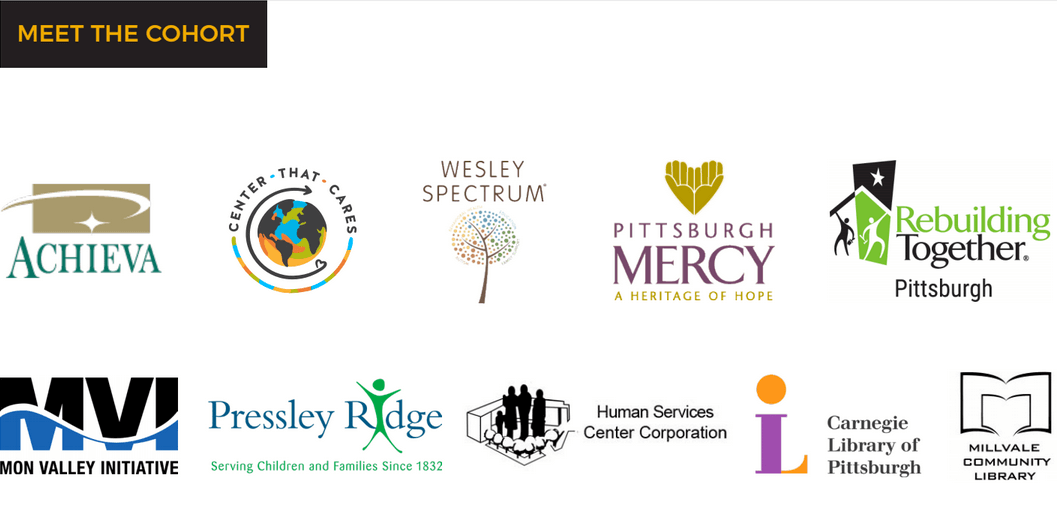
The second economic impact analysis performed was sponsored by The Forbes Fund, the United Way of Southwestern Pennsylvania, Neighborhood Allies, and Allegheny County Health Choices, and consisted of 10 Allegheny County community focused nonprofits. The cohort quantified the effects of the direct spending of each participating agency, but also estimated the multiplier effects of those organizations’ spending and employment on the local economy.
For ACHIEVA, this meant that the study would capture and quantify the effects of their spending both directly (Direct Effects) and indirectly (Indirect and Induced Effects) by tracing their initial spending as it “rippled” throughout additional sectors of the region’s local economy. The ability to trace their spending throughout the rest of the economy, from sector-to-sector as it’s continually spent by other businesses and their employees, is the key factor in economic impact studies’ ability to offer the most complete possible picture of an organization’s importance.
Upon the project’s culmination, ACHIEVA possessed a collection of accurate, reliable, and relevant metrics with which to support their claims and appeal to more legislators, policy makers, and private donors.
What exactly did this do for ACHIEVA?
What kinds of benefits did the organization enjoy thanks to economic impact analysis?
First, having obtained the quantifiable evidence to demonstrate its own impact on the local economy, ACHIEVA gained a more powerful stance with which to leverage for increases in government grants.
Secondly, having obtained that knowledge and corresponding data, ACHIEVA improved its power to lobby for more beneficial legislation during its continued dealing with legislators.
Finally, and perhaps most importantly, the economic impact analysis provided ACHIEVA with a foundation upon which to establish meaningful and effective measures of the organization’s personal value.
The Takeaway
The value of economic impact analysis is known throughout the nonprofits industry, but has historically been a privilege limited to those with large budgets or access to specialized consultants. However, today, economic impact analysis can be performed for a reasonable price, and by organizations themselves. IMPLAN is a tool that makes economic impact analysis accessible to groups of any size or budget.
Year after year nonprofits and other small organizations across the country are feeling the pressure to prove their value and and make the importance of their operations known. For decades, IMPLAN has proven to be instrumental in giving these groups the power to do so by making economic impact analysis accessible and easy to perform. Plus, with economic data that is constantly being vetted by industry-leading research analysts, IMPLAN provides these small organizations with metrics that are easy to present to stakeholders with confidence.
After successfully advancing their rapport with important contributors and constituents thanks to this strategy, ACHIEVA became just one of many groups who’ve experienced the benefits of such analyses in furthering their cause and serving their communities most effectively. Using economic impact analysis with IMPLAN, small groups like ACHIEVA can finally assert themselves with data-devised evidence of the degree to which their local economies rely on them.