
The First-Ever Tool for Downstream Analysis - Now with Multi-Regional Insight
IMPLAN's Forward Linkages Suite Unlocks New Economic Insights
Understand what's next... Then see the ripple effect.
Price changes don’t stop at the point of sale, and they don’t stop at a region’s border. A tariff felt in one state reshapes costs in the next. A supply shock in one country lands on a factory floor an ocean away. With MRIO now integrated into the Forward Linkages Suite, you can trace cost-push effects and downstream value as they cross regional and national lines, following the path your supply chain actually takes.
Whether you’re planning around tariffs, mapping cross-border exposure, or measuring how one region’s industry drives activity in another, Forward Linkages now gives you a 360-degree view that spans geographies, not just one at a time.
What's New?
Price Change (Cost-Push) Insights:
Model the impact of price changes on your selected good or service. Enter a percentage change or before-and-after prices to see how those shifts cascade across industries.
- Analyze national or sub-national regions
- Evaluate tariff impacts, supply chain disruptions, or operational efficiencies
- Support smarter pricing strategies, forecasts, and policy analysis
Downstream Contribution Insights:
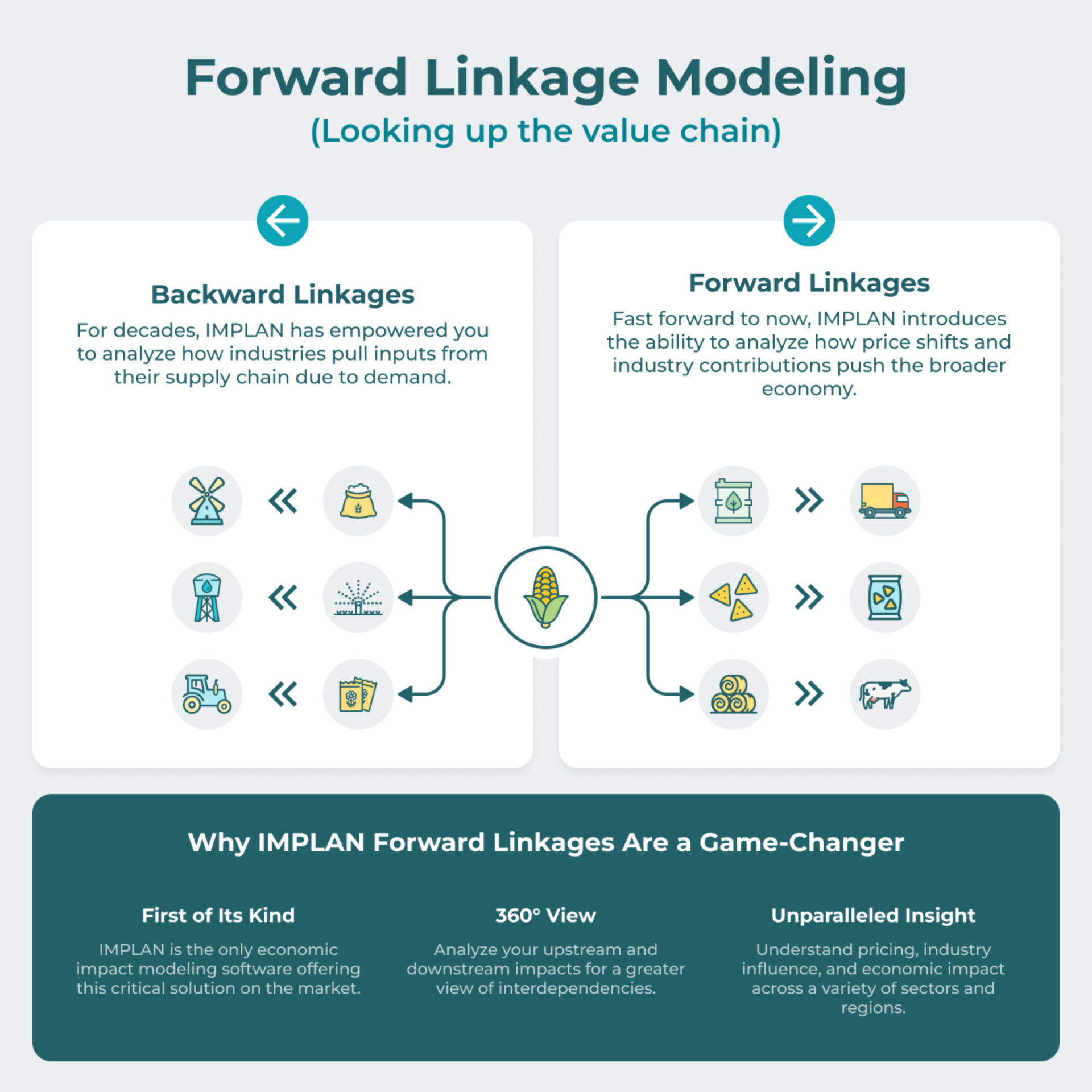
Understand how industries create value beyond their immediate outputs. See the full value chain for your selected industry and measure how it drives activity forward in the economy.
- Track the first three rounds of downstream effects on a supply chain
- Quantify contributions to output, GDP, and employment
- Combine upstream and downstream views for a 360° perspective
Downstream Multipliers:
Every new IMPLAN model build now includes downstream multipliers, detailing the supply chain relationships that drive industries forward. Existing models gain these multipliers when run in a Downstream Contribution Guide analysis.
- Reveal how industries push value through supply chains
- Benchmark industry influence and compare scenarios
- Strengthen investment and development strategies
Multi-Regional Forward Linkages (New):
See how price changes and downstream value move between regions, not just within them. Pair any Forward Linkages analysis with MRIO to follow effects across state, provincial, or national boundaries.
- Trace cost-push effects from one region into the supply chains of another
- Measure how an industry in one geography drives output, GDP, and jobs elsewhere
- Model cross-border tariff exposure and interregional supply chain risk
Why It Matters
Recent tariff-driven supply chain shocks pushed U.S. wholesale prices up 0.9% in a single month, the largest jump in over three years. With volatility like this, businesses and policymakers need sharper tools to prepare for the future.
The Cost-Push Insights help you…
Anticipate pricing shifts driven by tariffs, transportation, energy, or resource risks
Understand downstream value creation across supply chains
Build resilient strategies in the face of economic disruption
Map cross-region exposure to see which geographies feel a shock and how far it travels
Who It’s For
For Businesses
Prepare for tariff impacts, optimize pricing strategies, and model supply chain risks
For Policymakers and Agencies
Forecast the ripple effects of policy decisions, tariffs, and regulations
For Researchers and Analysts
Strengthen forecasts, uncover hidden value chains, and expand insights beyond traditional impact analysis
How to Use It
Technology Efficiency Gains
Showcase how productivity enhancements and operational innovations can reduce costs across the value chain, empowering pricing decisions and accelerating technology adoption across key business functions.
Environmental Resource Risks
Forecast price volatility from climate, disease, or ecological threats.
Transportation Cost Shifts
Analyze how fluctuations in transport-related expenses affect overall product costs, helping businesses proactively adjust pricing or sourcing strategies based on mode-specific risks.
Supply Chain Disruptions
Evaluate how elevated pricing in a good or service, resulting from strikes, tariffs, or natural disasters, affects prices across the economy, informing decisions about a business’s supply chain.
Tariff Effects on U.S.-Made Goods
Track how tariff-driven cost changes in domestic goods propagate through supply chains to fine-tune sourcing and pricing.
Energy-Saving Technologies
Highlight the downstream cost benefits of adopting efficient energy solutions, giving stakeholders clear visibility into how sustainability investments drive price optimization across production and distribution.