
Scope 1, 2, 3 Emissions
Quantify Scope 1, 2, and 3 Emissions With Economic Context
When organizations are required to measure, disclose, or respond to Scope 1, 2, and 3 emissions, IMPLAN helps connect emissions data to economic activity, making reporting transparent, defensible, and decision-ready.
When Emissions Reporting Becomes Mandatory
Climate disclosure requirements are expanding rapidly. Public companies, large enterprises, suppliers, and government contractors are increasingly required to report greenhouse gas emissions across Scope 1, 2, and 3 categories.
For example, California’s SB 253 (Climate Corporate Data Accountability Act) requires public and private companies doing business in California with more than $1 billion in annual revenue to disclose Scope 1 and 2 emissions beginning in 2026, with Scope 3 reporting following in 2027.
These disclosures often come with tight timelines, evolving standards, and high scrutiny, making it essential to ground emissions reporting in consistent, well-documented analysis.
Turn Emissions Data Into Defensible Insight
IMPLAN supports Scope 1, 2, and 3 use cases by connecting emissions modeling with economic structure, allowing organizations to evaluate impacts across operations, energy use, and supply chains.
With IMPLAN, you can:
- Align Scope 1, 2, and 3 emissions with economic activity
- Evaluate emissions across operations, energy sourcing, and value chains
- Compare scenarios to assess tradeoffs between decarbonization and economic outcomes
- Support regulatory disclosures with transparent, documented assumptions
- Communicate results clearly to regulators, investors, and stakeholders

Who Uses IMPLAN for Scope 1, 2, and 3?
This is commonly applied by:
- Public companies subject to climate disclosure rules
- Enterprise sustainability and ESG teams
- Suppliers supporting Scope 3 reporting requirements
- Financial institutions and investors
- Consultants supporting emissions and disclosure analysis
- Public companies subject to climate disclosure rules
- Enterprise sustainability and ESG teams
- Suppliers supporting Scope 3 reporting requirements
- Financial institutions and investors
- Consultants supporting emissions and disclosure analysis
- Public companies subject to climate disclosure rules
- Enterprise sustainability and ESG teams
- Suppliers supporting Scope 3 reporting requirements
- Financial institutions and investors
- Consultants supporting emissions and disclosure analysis
- Public companies subject to climate disclosure rules
- Enterprise sustainability and ESG teams
- Suppliers supporting Scope 3 reporting requirements
- Financial institutions and investors
- Consultants supporting emissions and disclosure analysis
- Public companies subject to climate disclosure rules
- Enterprise sustainability and ESG teams
- Suppliers supporting Scope 3 reporting requirements
- Financial institutions and investors
- Consultants supporting emissions and disclosure analysis
- Public companies subject to climate disclosure rules
- Enterprise sustainability and ESG teams
- Suppliers supporting Scope 3 reporting requirements
- Financial institutions and investors
- Consultants supporting emissions and disclosure analysis
- Public companies subject to climate disclosure rules
- Enterprise sustainability and ESG teams
- Suppliers supporting Scope 3 reporting requirements
- Financial institutions and investors
- Consultants supporting emissions and disclosure analysis
- Public companies subject to climate disclosure rules
- Enterprise sustainability and ESG teams
- Suppliers supporting Scope 3 reporting requirements
- Financial institutions and investors
- Consultants supporting emissions and disclosure analysis
- Public companies subject to climate disclosure rules
- Enterprise sustainability and ESG teams
- Suppliers supporting Scope 3 reporting requirements
- Financial institutions and investors
- Consultants supporting emissions and disclosure analysis
- Public companies subject to climate disclosure rules
- Enterprise sustainability and ESG teams
- Suppliers supporting Scope 3 reporting requirements
- Financial institutions and investors
- Consultants supporting emissions and disclosure analysis
The Questions You Need to Answer
Scope 1, 2, and 3 analysis often requires answers to questions such as:
What are our total Scope 1, 2, and 3 emissions?
Which operations or supply chain activities drive the largest impacts?
How do emissions align with jobs, output, and economic contribution?
How do alternative scenarios affect emissions and economic outcomes?
How can we support disclosures with transparent methodology?
Scope 1, 2, and 3 Analysis in Action
Organizations use IMPLAN to support emissions disclosures, meet regulatory requirements, and evaluate how operational or supply chain changes affect emissions and economic outcomes.
You've Got Questions, We've Got Answers
What are Scope 1, 2, and 3 Emissions?
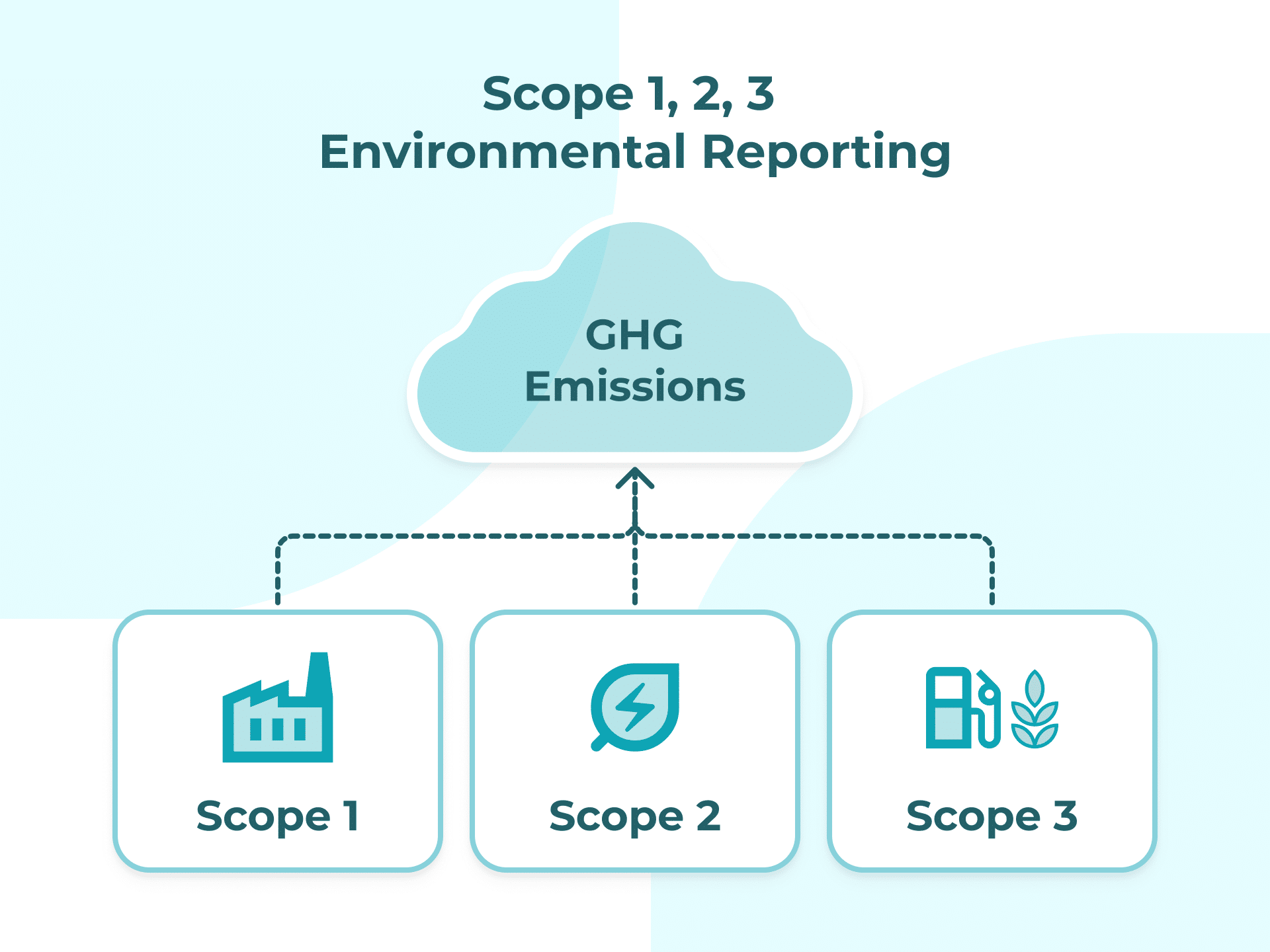
- Scope 1 covers direct emissions from sources you own or control, like fuel combustion and company vehicles.
- Scope 2 covers indirect emissions from purchased energy.
- Scope 3 covers all other indirect emissions across your value chain: supplier operations, business travel, product end-of-life, and more. Scope 3 typically accounts for over 70% of an organization’s total emissions.
What is SB 253 and who does it apply to?
California’s SB 253 requires companies “doing business” in California with more than $1 billion in annual revenue to disclose their full GHG emissions. Scope 1 and 2 reporting begins in 2026; Scope 3 in 2027. Non-compliance can result in penalties up to $500,000 annually.
Does SB 253 apply to companies headquartered outside California?
Yes. If your organization conducts business in California and meets the revenue threshold, SB 253 applies regardless of where you’re headquartered.
How does IMPLAN help with Scope 1, 2, and 3 reporting?
IMPLAN’s GHG Emissions Guide is a step-by-step workflow built into the application. It generates emissions estimates, allows you to refine them with your own inputs, and produces audit-ready outputs aligned with GHG Protocol standards — without starting from scratch.
What if I don't have supplier data for Scope 3?
IMPLAN uses spend-based modeling to estimate Scope 3 emissions even without supplier-level data, giving you full value chain coverage without the cost and time of collecting data from every supplier.
Is IMPLAN's methodology accepted for third-party audits?
Yes. IMPLAN’s methodology aligns with the GHG Protocol and every result is fully traceable, supporting third-party assurance as disclosure requirements evolve.
Who else beyond California companies needs to track emissions?
Requirements are expanding broadly — SEC climate rules apply to US public companies, CSRD applies to companies with significant EU operations, enterprise suppliers may be required to share emissions data with buyers, and federal contractors may face disclosure requirements under the Federal Supplier Climate Risks and Resilience Rule.
Can IMPLAN report emissions alongside economic data?
Yes. Users can report emissions alongside jobs supported and GDP contributions, helping organizations tell a complete impact story to investors, regulators, and stakeholders.
How granular is IMPLAN's geographic data?
IMPLAN supports analysis from the zip code level up to global (coming soon), suitable for both local facility reporting and enterprise-wide disclosure.
Is Scope 3 reporting available today?
Scope 1 and 2 are currently available through the GHG Emissions Guide, with expanded Scope 3 and regional reporting capabilities coming soon. Contact us to learn more about current features and upcoming enhancements.
IMPLAN's user-friendly interface made it easy to access valuable Environmentally-Extended Input-Output (EEIO) data. Once we were set up, it just clicked. Calculating our business travel emissions in IMPLAN was straightforward.

Related Solutions and Use Cases

Introducing IMPLAN’s Scope 1, 2, and 3 Economic Modeling: Measuring Emissions

What You Need to Know About California’s Climate Corporate Data Accountability Act
See How to Support Emissions Reporting With Confidence
Explore how IMPLAN helps organizations quantify Scope 1, 2, and 3 emissions alongside economic activity, so disclosures are defensible, consistent, and decision-ready.